
Reflections of the Rise of Russian Neotraditionalism and State Corruption in Leviathan (2014)
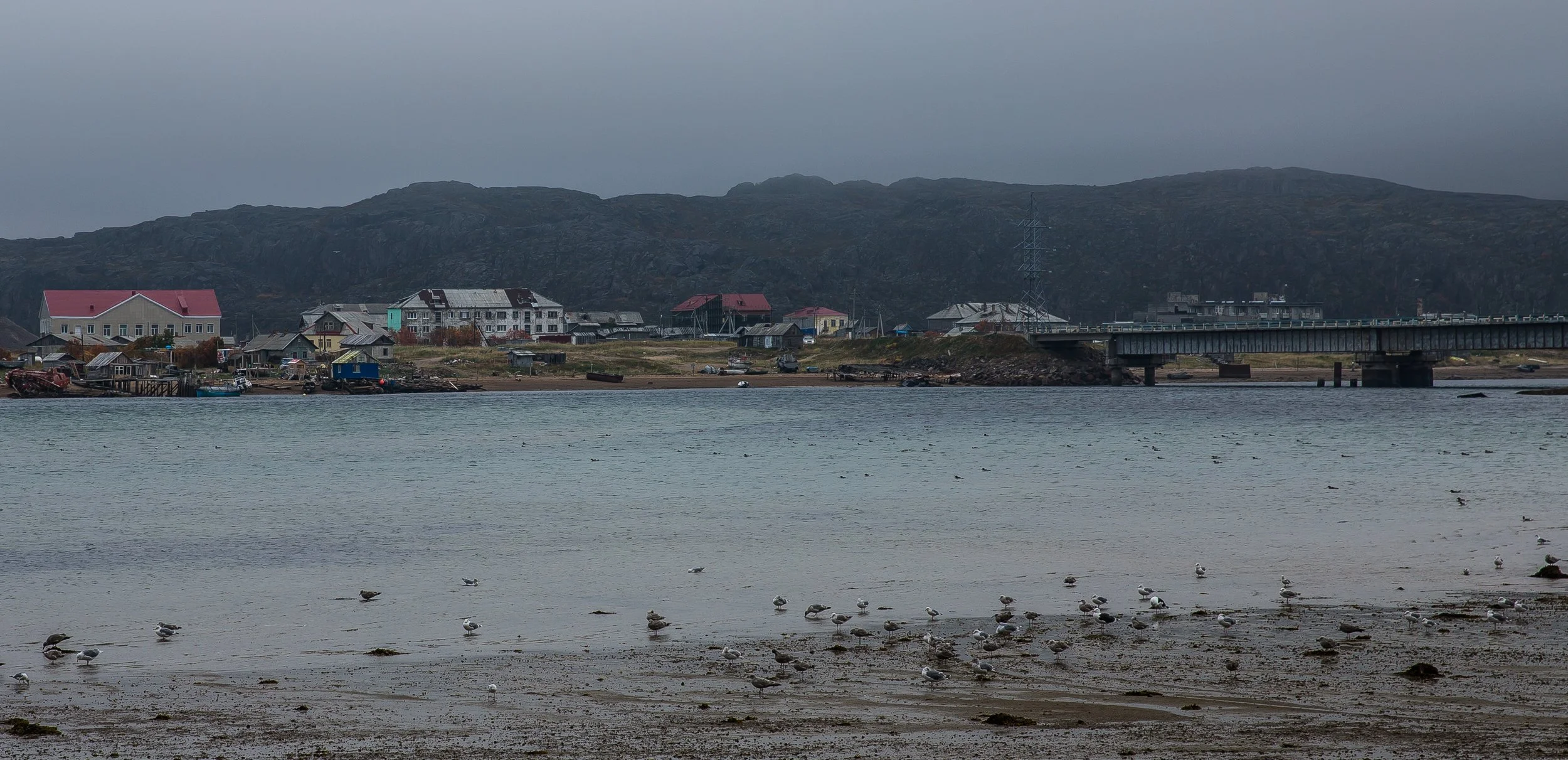
Teriberka, Kola Peninsula, Russia. Ninara. 2015
By Spencer Browning, University of California, Berkeley
Leviathan (2014), an award-winning Russian drama directed by Alexey Zvyagintsev, is set in contemporary Russia in a small provincial town in the far north. Filmed amid a backdrop of grey skies and desolate, rocky coastland, the film centers around a family attempting to fight the seizure of their home by the notoriously corrupt local mayor. To resist this seizure, Kolya, the property’s owner and the protagonist of the film, enlists the help of his longtime friend and Muscovite lawyer, Dima. As they fight a losing legal battle against Mayor Vadim Sergeyevich, the inefficiency, mismanagement, and corruption of the local bureaucracy becomes evident. Meanwhile, the dynamics between Kolya, Dima, and Kolya’s wife, Lilya, grow increasingly turbulent as Dima and Lilya begin an affair. Towards the end of the film, Lilya’s body is discovered washed up on the shore after an apparent suicide; however, Kolya is swiftly accused by the local police of carrying out her rape and murder. While Kolya is being prosecuted, his land is formally seized by the mayor, and his house is destroyed with all of his possessions inside. At the end of the film, Mayor Vadim Sergeyevich is revealed to be an actor in Kolya’s wrongful imprisonment, and the final scene reveals his new development on Kolya’s former land—not a villa, as Kolya resentfully predicted, but a Russian Orthodox Church. Through its use of sound and cinematography, Leviathan encapsulates the foremost issues in Russian society throughout the 2010s: reactionary neotraditionalism and a corrupt government encroaching on citizens’ political freedoms.
Leviathan is both set in and was filmed during a period of great political turmoil within Russia and the greater post-Soviet sphere, during which several post-Soviet countries sought to economically and politically distance themselves from Russia and align themselves with Europe. The 2000s and 2010s were marked by geopolitical conflicts between the Russian Federation and the former Soviet republics, namely Ukraine and Georgia. The process of filming Leviathan began in 2013, just one year after Vladimir Putin returned to office as President of Russia after serving as Prime Minister between 2008 and 2010. Putin’s 2012 reelection campaign followed in the wake of widespread protests across Russia, which would continue into 2013. Demonstrations that amassed thousands of citizens in major Russian cities decried Putin for running for a third term. They also called for a re-vote after claims of electoral fraud arose en masse during the 2011 Russian legislative elections, which saw Putin’s United Russia party gain the majority of seats in the Duma. Amidst this turmoil in the 2010s, the Russian government became increasingly focused on reviving traditionalism and the relevance of Orthodox Christianity within Russian society. Leviathan was released at a pivotal point in Russian political history, coming out less than a year after the country’s largest contemporary protest movement ended, thus marking this politically uncertain time for Russia.
In Leviathan, religionis portrayed both in juxtaposition to and as an agent of corruption. A subtle example of this occurs halfway through the film as Kolya’s friend, Stepanych, is driving to the group’s hunting and picnic spot (Zvyagintsev 2014, 1:00:43-1:01:09). This brief scene begins with an over-the-shoulder shot filmed from the backseat of Stepanych’s car and abruptly cuts to a close-up shot of the dashboard, which displays a set of three Orthodox icons. To the right of these icons, nearly out of frame, sits an additional display featuring three topless women. The aim of this close-up shot is to guide the audience’s attention to Stepanych’s Orthodox memorabilia. The filmmakers’ choice to focus the camera on the Christian icons while keeping the images of the half-naked women within the frame creates a juxtaposition of the religious and the vulgar, thus establishing Stepanych as a character who considers himself pious despite not adhering to the essential moral doctrine of Russian Orthodoxy. This close-up scene provides a critique of the Putin regime’s emphasis on Russian Orthodoxy and traditional values, which has arguably developed not as a natural course of a sociocultural religious revival movement, but rather as part of a nationalist project to strengthen the Russian national identity in the face of liberal democratic practices spreading from Western Europe into former Soviet republics. During the 2000s and 2010s, nationalist sentiment in Russia became increasingly associated with support for the Russian Orthodox Church; in the wake of the 2011-13 protests in Russia, Putin capitalized on these associations, contributing to the notion that devout Orthodox, conservative Russians were more patriotic and even morally and culturally superior to those Russians who favored a liberal democratic government structure. Support for Putin’s regime was increasingly portrayed as a peacekeeping force in the face of such liberal radicalism.
The sequence in which Kolya, Dima, and Lilya fruitlessly attempt to file a legal complaint against Mayor Vadim Sergeyevich at three separate institutions highlights the inefficiency, corruption, and mismanagement of the town’s local bureaucracy (Zvyagintsev 2014, 37:48-40:27). Through calculated shot selection and sound control, the director constructs a scene centered around miscommunication and discommunication that echoes the electoral fraud that had impacted Russia’s legislative election a couple years prior. In the first scene of this sequence, in which Kolya, Dima, and Lilya visit the local police station to file a report against Mayor Vadim Sergeyevich, the filmmakers use sound to convey the disconnect and lack of effective communication between the Russian state apparatus and the Russian people. The glass barrier separating the three protagonists and the police officer prevents the parties from communicating effectively with each other, muffling their speech and forcing them to raise their voices and repeat themselves. Through the muffling of sound, the film conveys how difficult it is for citizens to communicate with an increasingly oppressive and centralized state. Because Kolya’s hurried and unjust arrest is filmed from the police officers’ side of the glass barrier, the audience can only hear the officer’s voice while Kolya’s complaints are muted in the background. In this scene, which is shot from over the police officer’s shoulder, the audience watches from afar through a thick panel of glass as Kolya is all but silently taken by multiple officers offscreen. This shot selection alienates the audience from the protagonist, instilling in the viewer the feeling of being a bystander to an injustice. Kolya’s silenced resistance to his arrest represents how the demands of the Russian protests in 2011 and 2012 were not adequately acknowledged or met; rather, the Russian government enacted a series of laws placing severe restrictions on protests and threatening heavy fines for unauthorized political activity. In the two brief scenes that follow, Dima is unable to file a police report against the mayor at two separate courts due to their lack of present qualified personnel. The secretary at the first location informs him that the only prosecutor is out sick and the detective is out on a case; in the next scene, in which Dima asks to see a judge, he is told by the security guard that no judges, assistants, or secretaries are present. In both of these scenes, Dima’s search for justice on Kolya’s behalf is impeded by the same obstacle: a mismanaged, grossly understaffed apparatus of the state. This series of scenes encapsulates just how difficult it is for Russian citizens to use the governmental bodies that supposedly serve them; again, the film makes connections to the 2011 elections, where Russian citizens were not afforded their political right to participate in a just and fair legislative election.
Leviathan (2014) addresses the great societal and political challenges faced by contemporary Russians through the lens of a small family in the far north that falls victim to their local mayor’s corruption. The social critiques present in this film are enhanced through the filmmakers’ stylistic choices in shot selection and sound control. Leviathan accomplishes what only film as medium can, expertly synthesizing sound, visuals, music, and storytelling to transplant the audience into an all-encompassing, despairing world of complicated relationships, bureaucratic inefficiency, and political corruption.
Edited by Serena Reed (Columbia University School of General Studies ‘28) & Julia Hunt (Columbia College '27)