
Growing Up in Independent Georgia: What My Generation Thought Was Permanent
By Lizi Basilaia
I sometimes describe my relationship with Georgia as toxic. It is the place I love most in the world, and it has also managed to annoy, disappoint and occasionally terrify me with impressive consistency.
My name is Lizi Basilaia. I was born in an independent Georgia, which meant I grew up assuming that democracy was a normal part of life. Communism belonged to history books and family stories. Authoritarianism was something that happened elsewhere, or at least something Georgia had already escaped.
That assumption turned out to be optimistic.
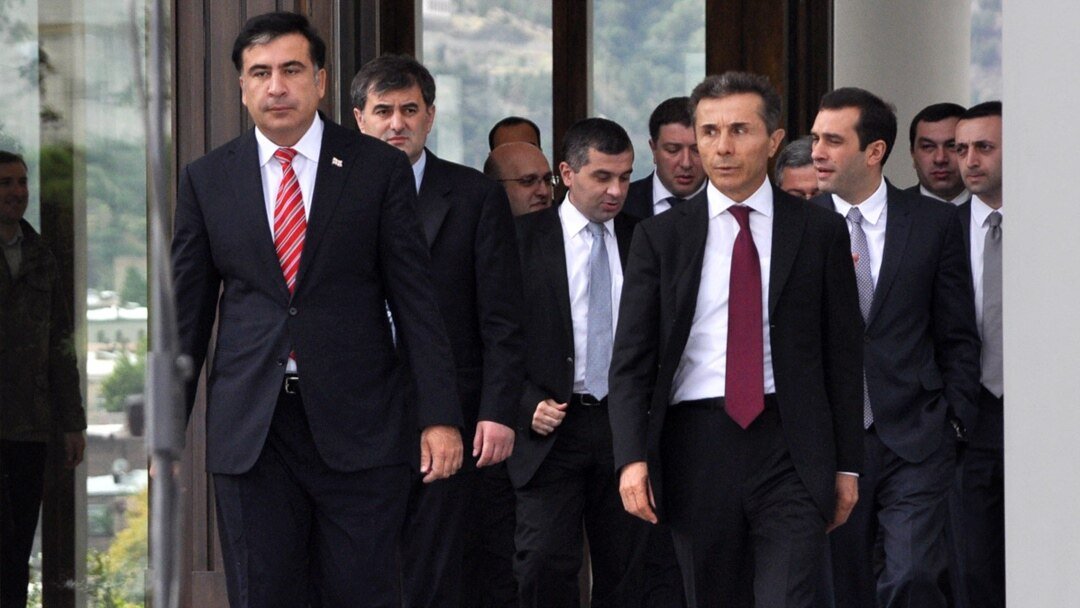
In 2012, Georgian Dream came to power under Bidzina Ivanishvili, an eccentric Georgian billionaire who made his fortune in Russia. The party won an election, power changed hands peacefully and Georgia was praised for proving that democratic transfers were possible in the region.
Credit: Mzia Saginadze/Radio Free Liberty
The peaceful transfer of power was genuinely important, but that did not mean Georgian Dream came without warning signs. For many people, they were visible from the beginning: Ivanishvili’s ties to Russia, growing hostility toward political opponents of the party, and the steady concentration of influence around one man who held enormous power without always holding formal office. Much of this was dismissed as ordinary political rivalry or as the excesses of a new government settling in. The direction was already there. Over time, it simply became harder and harder to ignore.
Sadly, democratic decline rarely announces itself properly. There is usually no dramatic soundtrack and no official declaration that the state is being captured. Institutions simply become weaker, one appointment at a time. Courts grow more predictable. Independent voices become enemies. Elections continue to take place, while gradually losing the qualities that make them meaningful.
I studied law at Ilia State University, expecting that I might eventually work within Georgia’s legal system. The more I saw of it, the less appealing that became. It is difficult to build a career around the rule of law when the law itself often feels like part of the joke. My interests gradually shifted towards history, politics and the question of how Georgia had ended up moving backwards again.
For years, I watched it happen with a kind of frustrated resignation. I complained a lot, as we tend to do. But assumed Georgia would continue moving backwards and that, eventually, I would leave.
Then came 2023.
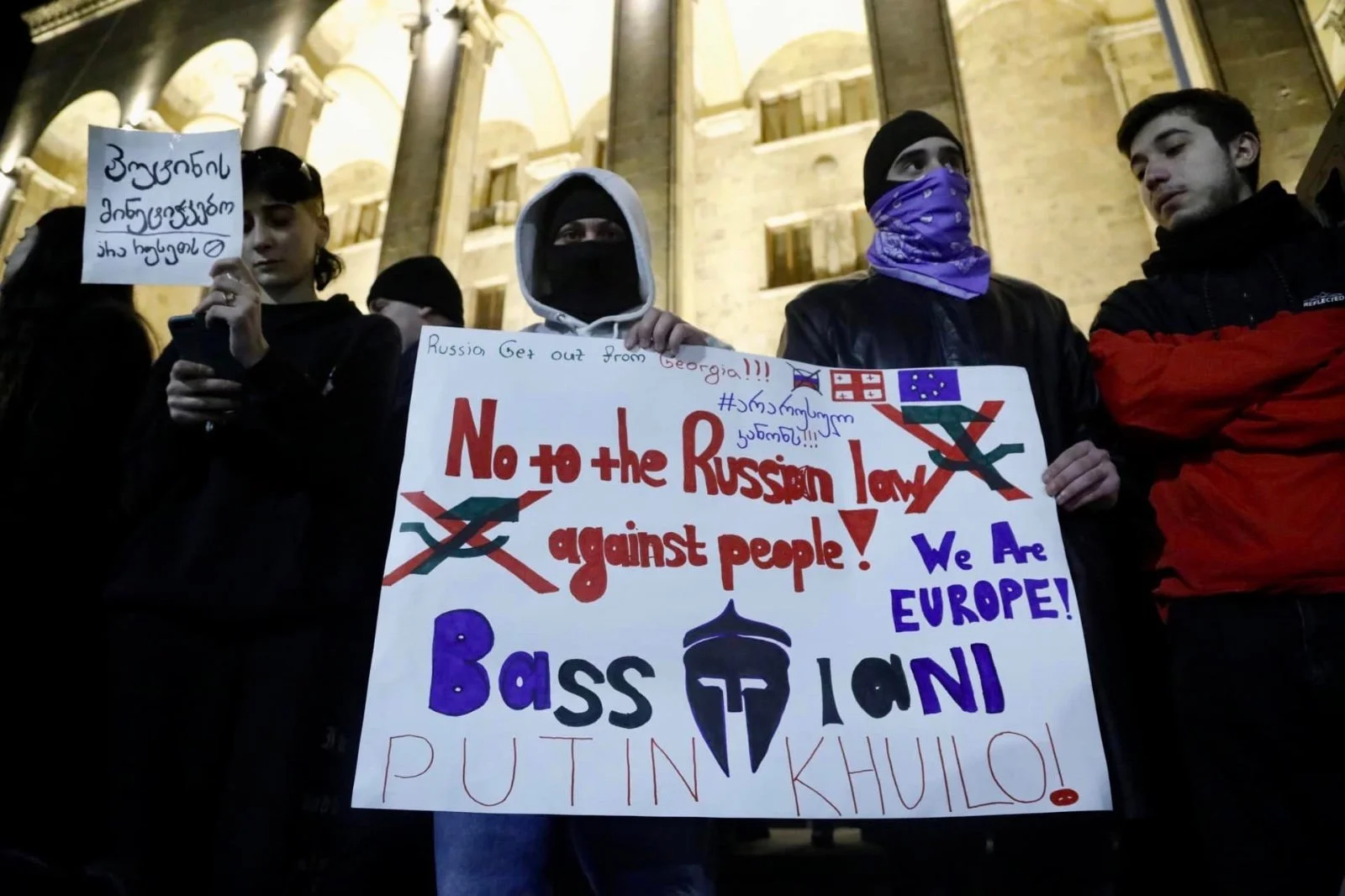
That year, the government introduced a Russian-style foreign-agent law targeting independent media and civil-society organizations. Georgia had seen large protests before, but this felt different.
Credit: Guram Muradov/Civil.ge
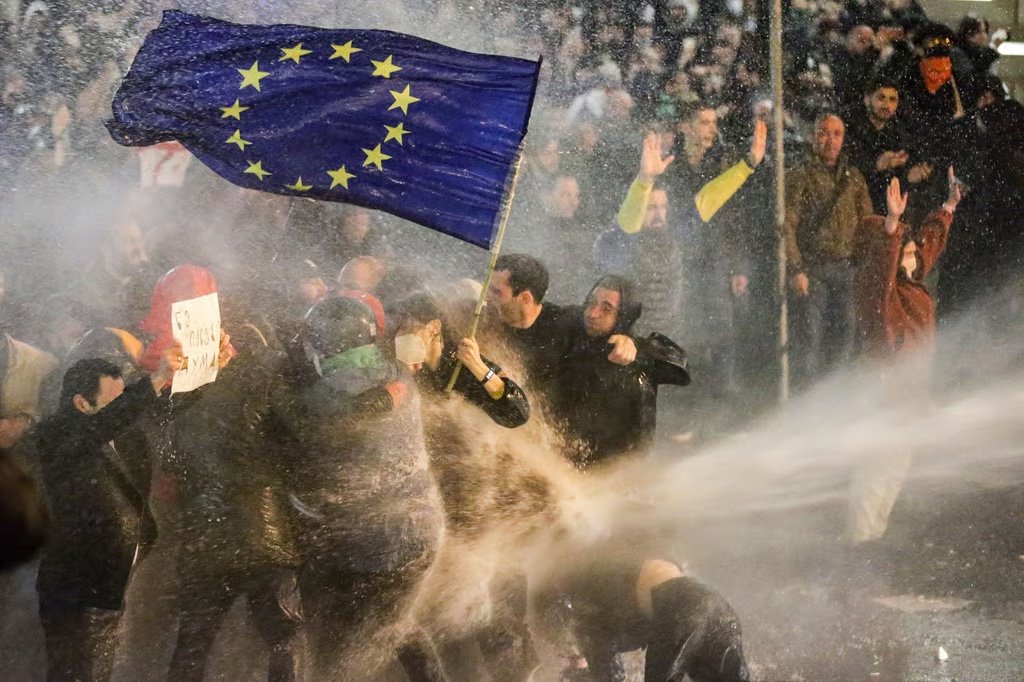
A generation raised in an independent country suddenly realized that independence was not guaranteed. Hundreds of thousands of people came into the streets. For the first time in my life, my friends and I faced tear gas, water cannons and arrests. The government withdrew the law. For a brief moment, it felt as though public pressure had worked. However, Georgian Dream brought it back a year later.
Since then, Georgia has moved through a rapid cycle of repression: a deeply contested parliamentary election, the government’s decision to halt the country’s EU accession process, violent crackdowns, political prisoners and an expanding collection of laws aimed at journalists, NGOs, protesters, businesses and almost anyone else capable of becoming inconvenient.
I have always followed politics and attended protests, but I never really imagined myself as an activist. I still do not. Activism sounds like a deliberate path chosen by someone with a plan. I mostly wanted to live a normal life in a normal country.
That has become surprisingly difficult. The university where I studied has since been stripped of 92% of its programmes. The research laboratory I work for has had to change its legal structure and constantly adapt to new laws targeting civil society. I have also accumulated 10,500 lari in fines for protesting.
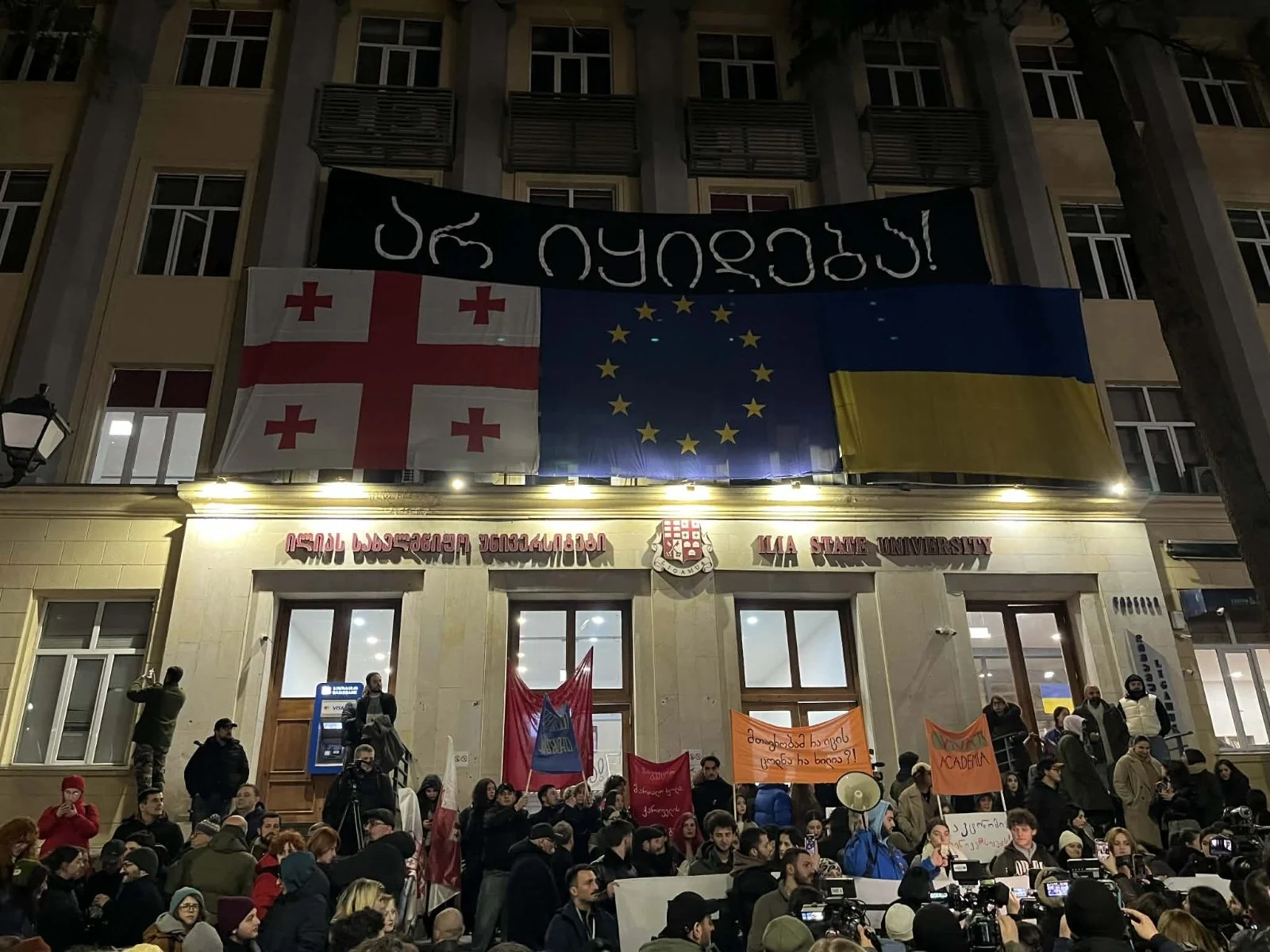
Protesters in front of Ilia State University hung a banner that read, “Not for Sale.” Credit: Rusudan Aptsiauri
I never expected to have court dates for standing in the street. I certainly did not expect a former Russian-language teacher who later became a sanctioned judge to fine me. Yet there I was, getting a call about my third fine while I was entering my first court date.
This is nothing compared to friends of mine who have been arrested and beaten. Over time, police stations and detention centres have stopped feeling abstract. I know which cells protest people are usually taken to, which lawyers to call and what usually happens after someone disappears into a police van.
Believe it or not watching decent people get punished because they care about their country doesn’t get normal.
Politics keeps entering parts of my life where I did not invite it: my education, my work, my friendships and, eventually, my bank account. At some point, it became obvious that the rights I had grown up taking for granted were not going to maintain themselves. If I wanted to keep them, I would have to help defend them.
This should probably make me less hopeful. Oddly, it has done the opposite. For the first time in years, I no longer think Georgians have accepted the direction of the country. The government may control institutions, but it has failed to make authoritarianism feel normal.
Underneath the exhausted political process, a real civic society is beginning to take shape. These are not donor-oriented people employed by NGOs or attached to political parties. They are students, parents, small-business owners, artists, teachers and other ordinary people who realised that no party, organisation or foreign government is going to protect their future for them.
At The Birch, I want to tell these stories. Not because Georgians need someone abroad to discover democracy on our behalf. We have been fairly clear about what we want. People have protested, organized, voted, documented abuses and kept independent media alive under conditions that are becoming more difficult by the month. What is missing is attention and, occasionally, the willingness to do something with it.
The Western world often (if at all) speaks about Georgia as though the situation is tragic but mostly beyond its control. In reality, even limited pressure can matter. Authoritarian governments care about sanctions, travel, money, international recognition and whether the people dismantling democracy are still welcomed in democratic capitals. Making life slightly less comfortable for those responsible would make life significantly easier for the people resisting them.
I want to write about the stories that disappear when Georgia is reduced to a small post-Soviet country somewhere near Russia: its democratic past, its reform years, its protest culture and the people currently paying a very real price for refusing to accept authoritarianism as inevitable.
Georgia has changed direction before. We can do it again.
In the meantime, I will continue my toxic relationship with it.
Credit: AFP
Lizi Basilaia works at the Soviet Past Research Laboratory, where she focuses on public history, memory politics and Georgia’s Soviet totalitarian past. Her broader interests include nonviolent civic movements, the rule of law and Georgia’s place in Europe. She holds an LL.B. from Ilia State University and is an Erasmus Mundus scholar in the European Politics and Society programme.
Edited by Lora Tseytlin