
How Effective Is Russian Dissent? Measuring Opposition, Repression, and Public Opinion During the Russo-Ukrainian War
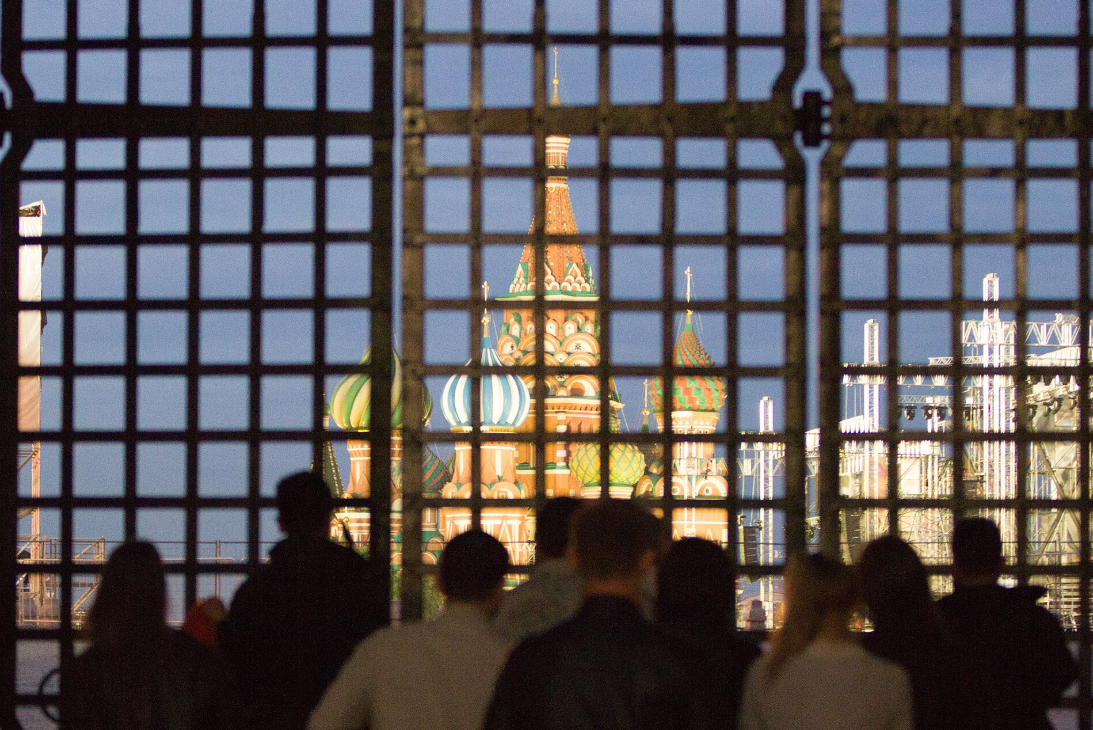
The Kremlin During Opposition Protests in 2012. Victor Grigas. 2012.
By Meera Patel, University of North Carolina at Chapel Hill
Dissent, whether in the form of protest or by expressing public anti-government sentiment, has been a part of the Russian political landscape since the collapse of the Soviet Union in 1991. Yet in over thirty years, no part of the Russian opposition movement has ever come to power, as the authoritarian nature of Vladimir Putin’s regime suppresses any opposition deemed a threat to its survival. The start of the Russo-Ukrainian War in 2022 marked significantly intensified repression of the existing opposition movement, with online censorship of anti-Kremlin and anti-war messaging having increased thirty-fold. Several laws explicitly prohibiting online and in-person protest have been implemented, and there have been severe legal consequences against dissenters as a result, to include imprisonment and exile.
Drawing upon my previous research regarding the impact and efficacy of dissent on the contemporary Russian political landscape, this paper aims to investigate how the Russian opposition movement has been affected by the Russo-Ukrainian War. In particular, I aim to determine whether dissent has seen an increase in efficacy due to an increase in global attention to Russian political affairs or if the impact of the opposition movement has been stifled due to the increase in government censorship.
Background
As a whole, the Russian opposition movement refers to any entity challenging the existing political status quo within Russia. However, when discussing Russian dissent, scholars such as Richard Sakwa, Marcus Kolga, Paulina Szeląg, and Olga Wasiuta typically separate the larger movement into two categories: 1) systemic opposition and 2) non-systemic opposition. According to the European Parliament, the systemic opposition is defined as any non-leading political parties “that are accepted by the regime and integrated to the electoral system”, whereas the non-systemic opposition refers to “isolated movements which are kept out of the electoral process.”
Systemic Opposition
Given Russia’s nominally multi-party system, the role of the systemic opposition is to maintain the appearance of Russia as a legitimate democratic federation. By having different parties representing a range of policies and interests, the systemic opposition presents the illusion of democratic choice to the Russian electorate; however, the outcome of elections is predictable, as the Kremlin-backed party, United Russia, typically dominates the electorate and the “systemic opposition has limited and predictable support” (see figure below). Additionally, the parties in the systemic opposition are expected to maintain a certain degree of loyalty to the regime, and as a result, they are generally unable to mount a legitimate challenge to the regime, ultimately existing solely for the purpose of maintaining the perception of democratic legitimacy.
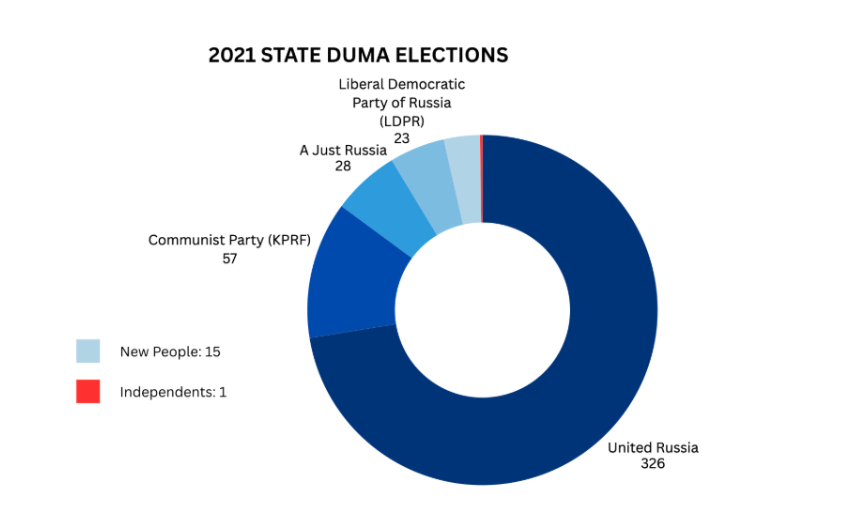
Figure 1. Party distribution of the 450 seats available in the 2021 Russian State Duma elections.
Non-Systemic Opposition
Alternatively, the non-systemic opposition is primarily composed of independent media outlets, activist groups, and a handful of prominent individual figures who operate outside of the government and position themselves as opposing not just certain government policies, but rather the government as a whole. This is generally accomplished via public demonstrations and social media platforming, the latter of which has brought a wide base of both domestic and international attention and support to certain movements, with the Anti-Corruption Foundation (ACF) being the most prominent instance of this. However, due to the nature of the non-systemic opposition, dissenters are often subject to heavy censorship and prosecution.
Additionally, the non-systemic opposition experiences a significant degree of fragmentation, which is detrimental to the efficacy of these movements as a whole. Disunity and strategic disorganization is prominent within the movement as a whole, as individual groups and movements often disagree on key issues such as whether to work within the political system or to advocate for more radical change, and as a result of this fragmentation, movements are unable to effectively mobilize and mount a viable challenge to the regime. Generally speaking, the majority of existing scholarship on the Russian opposition movement refers to the non-systemic opposition, and, as a result, the non-systemic side of the Russian opposition movement will be the primary focus of this research. However, most existing scholarship focuses on the state of Russian dissent prior to the start of the Russo-Ukrainian War, so this paper will focus on addressing how the war has affected dissent in order to fill this gap.
Methodology
The research design of this paper relies on a mixed-methods approach, consisting of both qualitative and quantitative data. Most of the quantitative data is sourced from both my own and other scholars’ pre-existing research as well as numerous case studies, primarily focusing on individual alternative political movements and how their efficacy has been impacted by the ongoing war in Ukraine. Additionally, while the research does use quantitative data when available, it is important to acknowledge the risk of potential falsification of data by certain sources, particularly concerning data drawn from Russian state databases. In order to combat this, all statistical information will be cross-referenced with data from Western and independent Russian outlets when available to confirm data accuracy.
Public Censorship
Censorship has been a prevalent part of the Russian political landscape for decades, as it is the primary method employed by the Kremlin to silence any opinions or views that could be viewed as oppositional to the regime. Since the start of the war in Ukraine, this repression has intensified significantly, highlighted by the introduction and intensification of various laws criminalizing dissent.
2022 War Censorship Laws
In 2022, amendments were made to the Criminal Code of Russia criminalizing “public dissemination of preemptively false information about the use of the Russian military” (Article 207.3) and “public activity aimed at discrediting the use of the Russian military” (Article 280.3), with repercussions of up to fifteen years in prison and fines of up to five million rubles (approximately $61,831 USD) for any violations. As a result of these censorship laws, it is illegal to refer to the war in Ukraine as a war, with the only approved alternative terminology being “special military operation” or “police action.”
More than 10,000 people have been prosecuted under these laws, with anti-war protestors being frequently arrested on counts of domestic terrorism and most independent media outlets being prosecuted on counts of misinformation. Notably, the implementations of these censorship laws are a direct violation of Russia’s human rights obligations under Article 10 of the European Convention on Human Rights and the International Covenant on Civil and Political Rights, under which member states are required to protect freedom of expression. In response to this international outrage, Kremlin officials have repeatedly rejected the accusations, with Russian foreign minister Sergey Lavrov dismissing it as a “stage-managed anti-Russian provocation.”
Unfortunately, the weaponization of anti-terrorist rhetoric to justify the repression of civil liberties in Russia has long been a pertinent issue. By labeling individuals as “terrorists” or “extremists”, the Russian state is able to forego judicial processes and cut people off from basic financial services and income without a court order. However, 90% of these convictions were not made in response to any actual terrorist attacks, either planned or committed. Furthermore, according to statistics published by Amnesty International:
As of December 2023, the Federal Financial Monitoring Service’s “List of Terrorists and Extremists” included 13,647 people… of them, 13% were women and 106 were under 18 years old. Being included in this registry, which happens without any judicial review, leads to the freezing of bank accounts and restricts monthly spending to 10,000 rubles, or around $110 USD… in the first six months of 2023 alone, Russian courts convicted 39 individuals of committing or planning terrorist attacks, more than in any entire year in the last decade.
Expansion of 2012 Foreign Agent Laws
Additionally, Russia’s foreign agent laws, initially implemented in 2012, saw a significant expansion in 2022. While the original law primarily applied to non-governmental organizations receiving foreign funding, the term “foreign agent” was redefined in December of 2022. This amendment expanded the definition of “foreign agent” to include independent publications such as Novaya Gazeta and Meduza, international organizations such as Amnesty International, the ACF, and the Committee Against Torture, and individual opposition figures such as Ilya Yashin and Vladimir Kara-Murza. The amendment to the law expands the definition of a foreign agent to the point where “almost any person or entity, regardless of nationality or location, who engages in civic activism or even expresses opinions about Russian policies or officials’ conducts could be designated as a foreign agent.” Additionally, any person or organization designated as a foreign agent is required to comply with all the requirements the designation entails the day after they are added to the official foreign agent registry, and the designation cannot be contested in court. Essentially, the foreign agent designation is the legal equivalent of being labeled as a spy or traitor, and anyone labeled as a foreign agent is treated by the government as such.
Falsification of Public Opinion Polling
Not only is dissent completely criminalized in Russia, but public opinion polling gathered by the Russian government is predominantly falsified, preventing any accurate reporting on how the Russian populace feels about the existing political status quo, and this lack of accurate public opinion data has only been amplified by the war. Polling data on public support for the war in Ukraine is extremely skewed, with polling data gathered from Russian databases suggesting a much higher degree of support for the war in comparison to polling data gathered from media outlets unaffiliated with the Russian state. These independent outlets, however, are predominantly banned in Russia, due to their condemnation of the war as well as their continued support of individual opposition leaders.
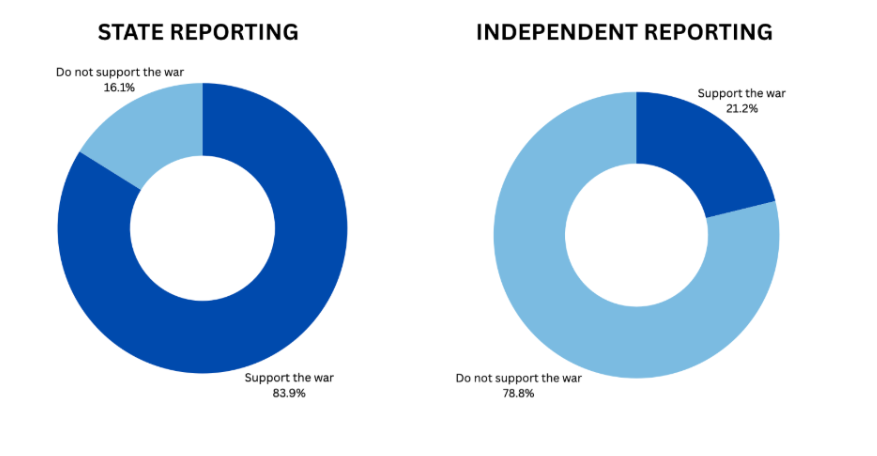
Figure 2. Comparison between public opinion polling data from state versus independent media outlets concerning support for the Russo-Ukrainian War in 2025.
Media Repression
The media is arguably the most effective in disseminating any form of political information to a wide range of audiences and is therefore subject to heavy monitoring and censorship. Scholars Anastassiya Mahon and Scott Walker refer to this tactic as information coercion and define it as “the use of various tactics and strategies to manipulate, control, or influence the flow of information with the aim of achieving specific objectives.” According to Mahon and Walker, information coercion can either be overt and covert, with the former being generally applied to state-operated media and the latter to independently-operated media.
Overt Information Coercion & State Media
Overt information coercion is primarily accomplished via the spreading of misinformation and propaganda, and as the state-owned media is funded and operated through the Russian government, it is obligated to air exclusively Kremlin-approved messaging, making it an ideal platform for overt information coercion. Nightly television programs such as Russia-1 and Russia Today are particularly notorious for continuously airing pro-war propaganda. With Russia-1 averaging 2.55 million viewers daily as of 2025 and Russia Today being accessible to over 700 million people worldwide, the regime is able to strictly monitor what information and opinions the public is privy to, limiting any oppositional opinions’ ability to influence public opinion on an equally massive scale.
Additionally, since the start of the war, the Russian state has spread misinformation across various platforms in multiple countries, issuing claims that Ukraine is governed by a neo-Nazi regime, that Ukraine is committing genocide against the Russian-speaking population in eastern Ukraine, and that Western governments have imposed sanctions against Russia as a result of systemic discrimination of Russians across the West. This spread of Russian misinformation is far-reaching enough that it has prompted widespread international concern, with governments across the world (including, but not limited to: the United States, Canada, the United Kingdom, Germany, Poland, and Romania) as well as NATO issuing statements addressing Russian overt information coercion.
Covert Information Coercion & Independent Media
On the other hand, covert information control is accomplished via website and internet restrictions, with access to any websites critical of the Russian authorities being restricted in addition to all popular Western social media platforms, including Facebook and Instagram. Due to this, most independent media outlets are extremely difficult or impossible to access from inside Russia, and the implementation of the war censorship laws in 2022 have only made it more difficult, significantly restricting the dissemination of accurate war reporting.
According to research conducted by Ukrainian journalist Maksym Karas, independent journalism as a whole has seen an overall 70-80% decrease in internet traffic from within Russia since 2022. For instance, prior to the start of the war, the St. Petersburg publication Bumaga was averaging between 1.5 and 2 million visits a month. However, the website was banned in 2022 and designated as a foreign agent in 2023, thus forcing them into exile in Tbilisi, Georgia, from which they currently operate.
Another independent media outlet on Russia’s foreign agent list as of 2023 is the Latvian-based publication Meduza, which publishes its materials in both Russian and English. In November 2025, I had the opportunity to speak with Kevin Rothrock, chief managing editor of Meduza’s English-language branch. During our conversation, Rothrock revealed that most independent journals rely heavily on Telegram as a means of information distribution, as Telegram is a very popular platform in Russia. As Meduza has gathered about 1.2 million subscribers via Telegram, they are able to continue to spread accurate information despite Meduza’s website being blocked. However, as Rothrock noted in our conversation, with Meduza being designated as a foreign agent, it is extremely difficult for journalists to report on the ground, and they as well as many other independent journals have had to shift to explanatory journalism rather than reporting on new phenomena, further limiting the availability of accurate war reporting.
Additionally, following the recent bans on messaging apps such as Telegram and Whatsapp, there has been a significant increase in reliance on VPN apps to access corners of the internet that have been restricted by the state, such as independent reporting. In March 2026, Russian internet users downloaded VPN apps 9.2 million times from the Google Play store, a 14-fold increase from March 2025 with 35.7 million VPN downloads over the past year (between March 2025 and March 2026). Although VPNs were used by Russian opposition groups starting from 2012, Russian authorities did not see VPN use as a significant issue before the full-scale invasion, and even conducted a widespread campaign to popularize its use. However, in 2023, the Kremlin’s narrative surrounding the technology shifted as it became clear it was being used to circumvent internet restrictions, and they began to crack down on the use of said technology, with Russia blocking more than 400 VPNs as of mid-January 2026, which is 70% more than last year. Having declared some popular VPN services as “foreign agents” and subsequently blocking their use, some VPN services—particularly ones geared towards individual privacy—have ceased to work reliably in Russia. This crackdown has consequently triggered a new class of VPN services which are often specifically designed with existing Russian media blocks in mind; however, the Russian state consequently began targeting these new technologies, as well. In this sense, while the use of VPN services has been a popular reliable way for the Russian public to access outside information, the Kremlin continues to actively counter this flow of outside information, rendering it continually difficult to orchestrate and platform dissent in a widespread manner.
Targeting of Prominent Individuals
While individual figures within the Russian opposition are often unable to gather enough support and a wide enough platform to make any sort of forward momentum in challenging the political status quo of Putin’s regime, there have been occasions upon which the following has occurred. In the event that an individual is able to mobilize large groups of the Russian population, this is viewed as a threat to the stability of the regime, and these individuals typically end up imprisoned or killed. This is not a new issue and has been a persistent occurrence throughout the course of Vladimir Putin’s regime even before the start of the war, such as in the case of the killing of Anna Politkovskaya in 2006 and Boris Nemtsov in 2015. However, since 2020 when Alexei Navalny’s poisoning drew international attention and the start of the war in 2022 when more people started openly condemning the war, the intensity of this individual targeting has only intensified, with several outspoken figures being targeted through a mixture of legal and extralegal means. The use of extralegal targeting—most notably, poisoning—has been widely condemned by multiple international organizations, including Amnesty International, the Human Rights Watch, and the ACF. However, as these organizations have been designated as foreign agents, their condemnations are dismissed by the Russian state.
Alexei Navalny
Arguably the most influential figure of the contemporary Russian opposition movement, Alexei Navalny created the Anti-Corruption Foundation (ACF) in 2011. Much of his early career focused on exposing corruption within the federal government, and he gathered a wide base of supporters through his YouTube channel, where he openly denounced Putin’s regime and the corruption within the Kremlin. Over the course of several years, he gradually built up a following via social media, popularizing digital dissidence and allowing his campaigning to reach a wider audience. Navalny’s poisoning in 2020 drew widespread international attention to his cause and to the Russian opposition movement, and when Russia invaded Ukraine in 2022, he and the ACF openly condemned the war. Navalny was arrested several times across the course of his career and was killed in prison in Western Siberia in February 2024. His work is currently being continued by his widow, Yulia Navalnaya, who is the current head of the ACF and is widely considered to be the current face of the Russian opposition movement by Western media following Navalny’s death.
While it is difficult to consolidate the full extent of Navalny’s influence on the Russian opposition movement, notable aspects of his work include the ACF’s work in highlighting corruption in the Russian government, as well as the encouragement of voting for candidates potentially capable of posing a challenge to the ruling United Russia party. Furthermore, Navalny’s popularization of digital dissidence has not only widened the reach of the Russian opposition movement, but it has also encouraged a new generation of younger dissidents in Russia to continue to advocate for social change. Following Navalny’s death, various fractured opposition factions were temporarily unified against the Kremlin, and the opposition as a whole shifted from being focused on a single leader to being centered around a broader discontent among the Russian population.
Mikhail Khodorkovsky
A former oil oligarch, Mikhail Khodorkovsky was arrested in 2003 on charges of embezzlement and fraud, which he claims to have been fabricated after he “aired corruption allegations, challenged state control over energy exports, and funded opposition parties.”. He was pardoned by Putin and freed from prison in 2013, a move which was widely suspected to have been a PR move ahead of the 2014 Sochi Olympics. Following the annexation of Ukraine’s Crimean Peninsula by Russia in 2014, Khodorkovsky continued his open opposition to Putin’s regime and launched the Open Russia movement, a pro-democracy organization with the intention of uniting Russians in an attempt to challenge Putin’s regime. He was designated a foreign agent following the invasion of Ukraine, and he founded the Russian Antiwar Committee alongside other prominent dissidents, including Garry Kasparov, Dmitri Gudkov, and Vladimir Kara-Murza. Khodorkovsky currently resides in exile in London and continues to vocally oppose the war in Ukraine; however, his reach is limited due to his position outside of Russia. Considering how heavily social media is monitored and censored, most of Khodorkovsky’s messaging as well as that of other exiled opposition leaders often goes unheard inside Russia’s borders, limiting both the reach and the efficacy of the wider opposition movement.
Vladimir Kara-Murza
The former protégé of Boris Nemtsov, a prominent opposition leader killed in 2015, Vladimir Kara-Murza, is vice chairman of the Open Russia movement founded by Mikhail Khodorkovsky in 2014 and is currently heavily involved in the Russian opposition movement abroad. An outspoken critic of Vladimir Putin’s regime, Kara-Murza was poisoned twice in 2015 and in 2017 and, upon his recovery, returned to Russia despite the risks. He openly condemned Russia’s invasion of Ukraine in 2022, accusing the “dictatorial regime of the Kremlin” of committing war crimes in Ukraine. He was convicted of treason and sentenced to 25 years of prison in April of 2022; however, he was freed in a prisoner swap in 2024. Following his release, he worked with Yulia Navalnaya and Ilya Yashin to coordinate and lead anti-war and anti-Putin protests in Berlin and currently resides in exile. In August 2025, he was appointed as the Renew Democracy Initiative’s Dissident-in-Residence at Georgetown University.
Ilya Yashin
In addition to being the leader of the People’s Freedom Party in Russia from 2012 to 2016, Ilya Yashin also co-founded the Russian liberal-democratic political movement Solidarnost alongside Garry Kasparov, Boris Nemtsov, and Lev Ponomaryov. Yashin has been arrested several times over the course of his career while publicly protesting Putin’s regime, oftentimes alongside Alexei Navalny. He openly condemned Russia’s invasion of Ukraine and was charged and sentenced to eight years in prison under the war censorship laws, but was released in the same prisoner swap as Kara-Murza in 2024. Upon his release in 2024, the Russian Ministry of Internal Affairs declared Yashin a stateless person and placed him on a wanted list for refusing to identify himself as a foreign agent and, as a result, Yashin currently operates in exile.
Conclusion
The Russian opposition movement’s efficacy was extremely limited prior to the Russo-Ukrainian War, and as it stands currently, the increase in censorship and prosecution by the Russian government since the start of the war has rendered dissent inside Russia almost entirely ineffective. On the one hand, the war has gathered significantly more international attention to the efforts of the opposition movement, with human rights organizations such as Amnesty International and the Human Rights Watch having since called attention to the criminalization of free speech and dissent in Russia. On the other hand, it has become virtually impossible for any group or individual to mount a legitimate challenge to the political status quo of Vladimir Putin’s regime. Whether it be independent media outlets or individual persons, the vast majority of the opposition lives and operates outside of Russia and is thus largely unable to impact Russia’s political status quo. It is for this reason that even members of the opposition aren’t optimistic about the movement’s future, as the ongoing Russo-Ukrainian war prevents dissent from existing within Russia. Therefore, if the Russian opposition movement cannot be defined as posing a legitimate and viable challenge to the stability of Putin’s regime, then, as said by Kevin Rothrock in our November 2025 conversation, “there is no more Russian opposition,” as the opposition that does remain functions almost entirely in exile and is therefore unable to affect any sort of legitimate change to the Russian political status quo. However, while the Russian opposition movement is unable to incite regime change, they have been largely successful in drawing international attention to both the true nature of the Russo-Ukrainian War, as well as the ongoing erosion of civil rights and freedoms in Russia under the current regime.
Edited by Audrey Jones (Columbia College'29), Jay Jacobson (Columbia University School of General Studies ‘28), & Lora Tseytlin (Barnard College'27)